Events
Mould Engineering and Brand Identity in Footwear Manufacturing
Translating design intent into consistent industrial performance
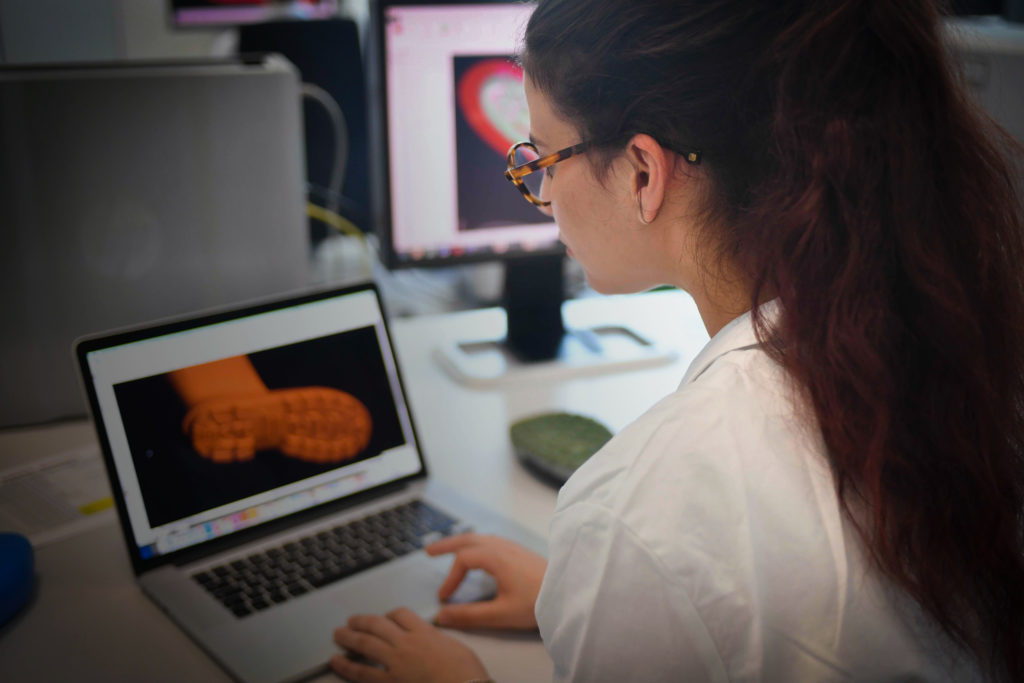
In today’s footwear industry, product identity is no longer defined by design alone. Performance expectations, manufacturing efficiency, and consistency across production cycles all contribute to how a brand is perceived in the market. As competition intensifies and product development cycles shorten, translating design intent into reliable industrial output has become a critical challenge.
Injection moulds sit at the center of this transformation. They are not simply tools used in production but engineered systems that determine how accurately a concept can be replicated at scale. From geometry definition to process stability, mould design directly influences both product identity and manufacturing performance.
Beyond shaping the final product, moulds define the level of detail, sharpness of profiles, and consistency of surface finishing that a product can achieve in production. Elements such as tread definition, edge precision, and depth of design features are all directly linked to the quality of mould engineering and to the specific machine used in production – Desma, Stemma, Main Group, Gusbi – and the properties of the compound.
In this sense, the mould becomes the point where design intent is either preserved or compromised. A well-engineered mould allows brands to maintain their distinctive features across production volumes, ensuring that identity is not lost as the product moves from concept to industrial reality.
From Design Intent to Industrial Reality
Every footwear project starts with a vision — a combination of aesthetics, functionality, and performance requirements. However, bringing that vision into production requires precise engineering decisions. Moulds must translate complex geometries into repeatable processes, ensuring that each produced component reflects the intended design.
This becomes particularly relevant in PU injection footwear, where material behavior, expansion dynamics, and thermal conditions must all be controlled. Without proper mould engineering, even well-designed products can result in inconsistencies during production.
Adapting Mould Engineering to Product Identity
A key responsibility of the mould maker is the ability to adapt design and process parameters to the specific requirements of each project. This includes cavity geometry, material flow, cooling systems, and venting strategies.
Each of these elements plays a role in defining how the injected material behaves and how accurately the final product meets expectations. In technical footwear, where tolerances are tight and performance is critical, these adjustments are essential.
Durability and Production Stability
Injection moulds operate under continuous thermal and mechanical stress. Over time, wear can affect precision, leading to variations in product quality. Ensuring durability is therefore not only a matter of longevity, but also of maintaining consistent output.
A well-engineered mould supports thousands of production cycles while preserving dimensional accuracy and surface quality. This reduces variability, minimizes defects, and contributes to overall production efficiency.
Operational Continuity and Efficiency
Modern footwear manufacturing often involves continuous production across multiple shifts. In this context, operational continuity becomes a key performance indicator.
Moulds must enable smooth transitions between shifts without requiring frequent adjustments or causing instability. Poorly designed tooling can lead to downtime, inconsistent results, and increased operational costs. Conversely, optimized moulds support stable processes and predictable output.
The Strategic Role of Mould Engineering
Mould engineering plays a strategic role in connecting product development with industrial execution. It ensures that design intent is not compromised during production and that efficiency targets are met.
For manufacturers, this means shorter time-to-market, improved product consistency, and greater control over production variables. In increasingly competitive markets, these factors become decisive advantages.
ZAGO executes injection tests on all moulds before shipping to ensure they are ready to start production upon delivery and without delay.
Conclusion – Engineering Identity into Production
In footwear manufacturing, product identity must be engineered into the production process. Injection moulds are the systems that make this possible, bridging the gap between design and scalable output.
By combining technical expertise with a deep understanding of material behavior and production dynamics, mould engineering enables manufacturers to achieve both precision and efficiency.
Since 1958, ZAGO has specialized in developing injection moulds for technical footwear, supporting manufacturers worldwide in achieving consistent, reliable, and high-performance production.