Moulds
Know-how & Experience in PU Injection Moulding
Discover Why Experience Still Matters for Footwear Production
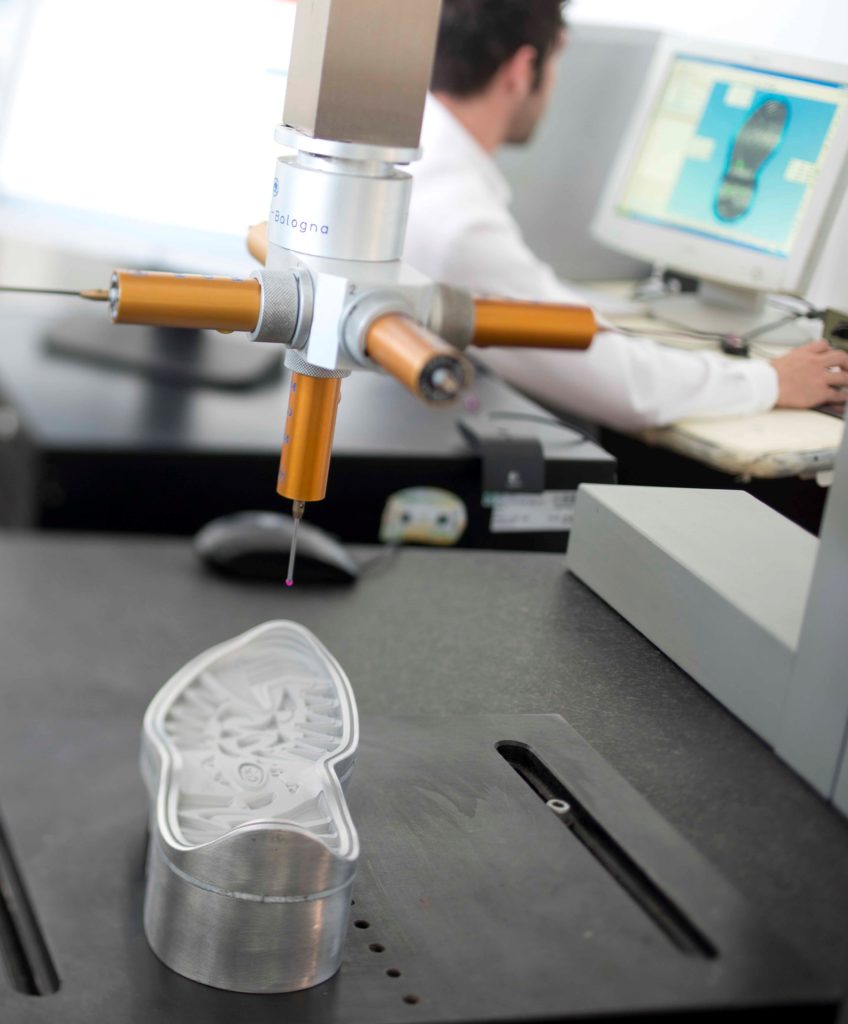
In modern footwear production, technological progress has significantly reshaped production processes. Advanced simulation tools, automated machining, and data-driven systems have improved precision, repeatability, and efficiency across the industry.
Yet, despite these advancements, one element remains fundamentally irreplaceable: experience.
In PU injection moulding, production is not governed by fixed conditions. Material behavior, environmental variables, and process dynamics interact continuously, creating a system that is both technical and adaptive. In this context, knowing what is technically possible is not enough. The real challenge lies in determining what is most effective under specific production conditions.
When Theory Meets Production Reality
Engineering principles define how a mould should perform under ideal conditions. However, real production environments rarely follow ideal scenarios.
Variations in raw materials, temperature fluctuations, machine calibration differences, and operator practices can all influence the behavior of the injection process. These factors often create deviations that cannot be fully predicted through simulation alone.
It is in these moments that experience becomes critical. Experienced engineers recognize patterns, identify root causes more quickly, and adapt solutions based on practical knowledge gained over time.
Interpreting Material Behavior
Polyurethane is a highly versatile material, but its behavior can vary depending on formulation, humidity, temperature, and processing conditions, as well as on the type of machine in use (Desma, Stemma, Main Group, Gusbi …). Trained professionals develop an understanding of how PU reacts under different conditions, allowing them to anticipate issues such as incomplete filling, density inconsistencies, or surface defects.
This ability to interpret material behavior is essential for maintaining consistent product quality.
Managing Process Complexity
PU injection moulding involves multiple interdependent variables. Adjustments to pressure, temperature, or cycle time can have cascading effects throughout the process. For example, increasing injection speed may improve filling but could also lead to higher internal stress or defects. Similarly, modifying cooling parameters may stabilize one aspect of production while affecting another.
Experience allows to navigate these trade-offs effectively. Instead of applying isolated adjustments, a reliable mould-making partner evaluates the system as a whole and identifies balanced solutions that optimize overall performance and stabilize the process.
Decision-Making Under Uncertainty
In dynamic production environments, decisions often need to be made quickly and with incomplete information. Experienced teams are able to assess situations, prioritize variables, and implement corrective actions with confidence. This reduces downtime, limits production losses, and ensures faster stabilization of the process.
These decision-making capabilities are not easily transferable through documentation alone. They are developed through continuous exposure to real-world production scenarios.
From Knowledge to Operational Judgment
Technical knowledge provides the foundation for mould design and process control. However, it is experience that transforms this knowledge into operational judgment.
This transition is what allows teams to move beyond theoretical optimization and achieve practical efficiency. It enables them to adapt to variability, refine processes, and continuously improve production outcomes.
A Competitive Advantage in Manufacturing
In increasingly competitive markets, the ability to combine knowledge with experience represents a significant advantage. Manufacturers benefit from shorter development cycles, improved production stability, and more consistent product quality. These factors contribute directly to cost efficiency, scalability, and overall competitiveness.
Working with partners who combine engineering expertise with long-term experience ensures that production challenges are addressed not only with technical solutions, but with practical insight.
Conclusion – Where Experience Drives Performance
In PU injection moulding, technology and knowledge are essential, but they are not sufficient on their own. Experience provides the context needed to apply technical expertise effectively, transforming potential into performance.
With nearly 70 years of experience, ZAGO combines engineering knowledge with practical understanding, supporting manufacturers in achieving reliable, efficient, and high-performance production.